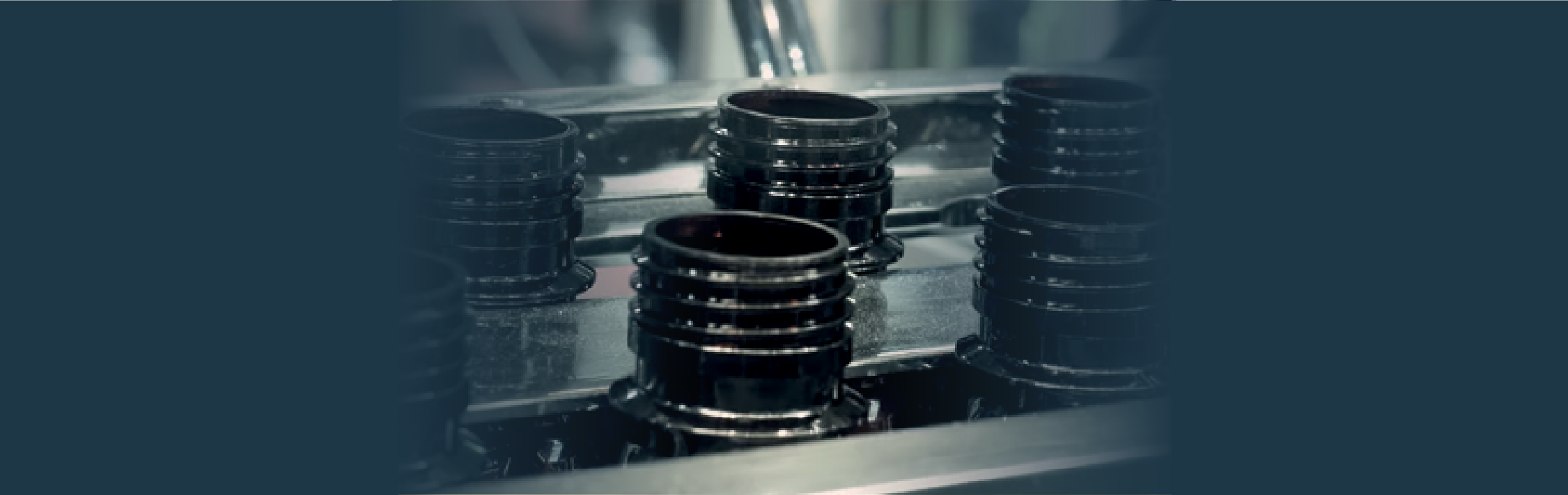
Manufacturing of elastomer seals is focused on an Auditee’s ability to consistently produce elastomeric components that conform to applicable technical specifications and customer requirements. Under the Nadcap® program, this process evaluates the end-to-end manufacturing controls used to ensure elastomer seals perform as intended in demanding aerospace and defense applications. Technologies involved include compound mixing, preparation of elastomers, substrates, and textiles, molding and curing operations, calendaring, textile solution coating, deflashing, and final testing and inspection.
Most SEAL audits are currently conducted for manufacturers of finished seal products; however, Nadcap® SEAL audits are also available for compounders who want to demonstrate compliance with aerospace industry requirements. This process is critical to the industry because effective control and verification of elastomer seal manufacturing directly reduces scrap, quality escapes, and field failures. Inadequate process control can result in pressure or fluid leakage, aircraft safety risks, aircraft-on-ground (AOG) events, fire protection failures, and material contamination.
The Elastomer Seal Task Group was established following the first Nadcap audit in this commodity in 2002 to address these industry risks and improve overall product conformity. The task group’s scope includes molded rings, molded compression seals, molded O-ring cord, molded-in-place gaskets and plate seals, fabric and textile-reinforced seals, and compounding. Its goal is to reduce nonconforming product through more thorough review and verification of customer specifications and requirements, while continuously improving Audit Criteria based on feedback from Auditees and Auditors.View our "How to Get Started" page and walk through the necessary steps you'll need to take and get resources or create an EAN account to request a quote.
confidence in supplier quality system performance.

What are SEALS Industry Challenges?
- Fluid leakage from various systems
- Pressure leakage
- Aircraft safety risks
- Aircraft-on-ground (AOG) events

How a Nadcap SEALS Accreditation Supports You
- Reduces the risk of pressure and fluid leakage, quality escapes, and field failures that can impact aircraft safety, fire protection systems, and operational reliability
- Helps identify gaps in process control, calibration, material handling, and shelf-life management before they result in nonconforming product or AOG events
SEALS Nadcap Audit Criteria
AC7115 – Audit Criteria for Elastomer Seals
AC7115/1 – Audit Criteria for Molded Rings, Molded Compression Seals and Molded O-Ring Cord
AC7115/2 – Audit Criteria for Molded-In-Place Gaskets/Plate Seals
AC7115/3 – Audit Criteria for Fabric/Textile Reinforced Seals
AC7115/4 – Audit Criteria for CompoundingThe PRISM EAN provides suppliers with a single place to view, understand, and navigate Nadcap Audit Criteria so you know exactly what will be assessed before, during, and after an audit. Create an EAN account to access the criteria and learn what you need to know to support your Nadcap accreditation.
Common Nonconformances Found During an SEALS Audit
- Content
Incorrect sampling plans used for batch and lot testing
- Content
Use of captive laboratories for batch and lot testing that are not accredited
- Content
Equipment used to control or monitor the process not being calibrated
